Nowadays, patients usually prefer to check doctors’ profiles online before making an appointment, which includes checking reviews on Google, reading relevant information about the clinic, the doctor’s qualifications and services, and finding any other necessary information online. The information patients find affects their first impressions of the doctor and the practice.
Therefore, online reputation management for doctors is essential for medical practices nowadays. It ensures that doctors have the right information about themselves, take patient feedback into account, and use it to build their reputation in a professional way.
Doctor reputation management means not deleting all negative reviews and creating a perfect rating for oneself and rather having the right information about oneself and responding to patients’ concerns appropriately.
What Is Doctor Reputation Management?
Doctor reputation management is concerned with enhancing and controlling the online representation of a doctor or medical office. This includes anything from search systems to feedback websites, medical directories, online business registers, web pages and social media platforms.
The basic processes involved in doctor reputation management include:
- Monitoring reviews and online mentions
- Correcting outdated clinic information
- Responding to feedback without sharing private details
- Improving the quality of doctor and clinic profiles
- Publishing helpful and accurate content
- Reporting false or policy-violating content
- Tracking common patient concerns
An online reputation management service for doctors should facilitate public trust while also ensuring compliance with professional standards. The client’s privacy should be maintained, and no deceptive statements regarding medical services or treatment results must be made.
Why Is Reputation Management Important for Doctors?
Choosing a doctor is a personal decision. Patients want to feel confident that the doctor is qualified, professional, and easy to approach. A complete and accurate online presence helps them make an informed choice.
Managing a doctor’s reputation is necessary for many reasons:
– Establishes confidence in patients – appropriate qualifications, services, contact details, and authentic reviews provide patients with the needed information about the practice.
– Enhances presence on the Internet – up-to-date profiles and informative website content allow locating the desired doctor much faster.
– Facilitates communication with patients – professional responses indicate that the practice pays attention to feedback.
– Determines service problems – the same complaints about waiting time, billing, or attitude of the staff may reveal areas to enhance.
How to Manage Doctor’s Online Reputation
The initial step in managing an online reputation in the field of medicine is to get a clear sense of what information is available to patients. It is often possible to complete a simple search and profile audit to find out about missing information, outdated content, duplicate listings and reviews that have not been answered.
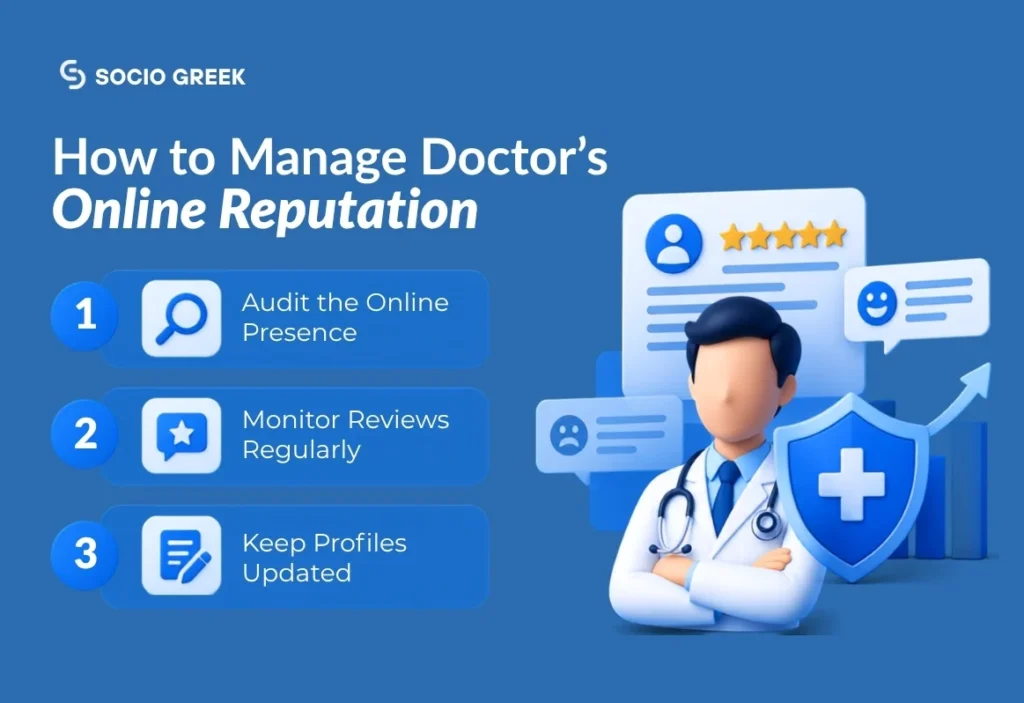
1. Audit the Online Presence
Find out the name of the doctor, name of the clinic, where the doctor specializes, and the location. Look through the initial few pages of the search results. Look up the doctor’s details on the Google Business Profile page, medical directories, social media, and the practice website.
Confirm that the following information is correct everywhere:
- Doctor’s name and qualifications
- Medical speciality
- Clinic address and phone number
- Opening and consultation hours
- Website and appointment links
- Services and treatment information
All information about qualifications, awards, and treatments must be verifiable.
2. Monitor Reviews Regularly
Reviews should be checked across the platforms that matter to the practice. Look beyond the average rating and study the topics mentioned by patients.
Common subjects may include:
- Appointment booking
- Waiting time
- Staff communication
- Billing information
- Follow-up support
- Cleanliness and accessibility
One negative review may be based on an individual experience. However, several similar comments may point to a real operational issue. These patterns should be shared with the responsible clinic team.
3. Keep Profiles Updated
Old phone numbers, incorrect hours, or duplicate profiles create confusion. They can also lead to missed appointments and poor patient experiences.
Every important profile should be reviewed regularly. When a doctor changes location, adds a service, or updates consultation hours, the same information should be corrected across all major platforms.
How Should Doctors Respond to Patient Reviews?
Responding to reviews is a sensitive part of any doctor online reputation management service. Medical practices can reply to feedback, but they must not reveal private patient information.
The American Medical Association advises doctors not to disclose patient information or even confirm that a reviewer is a patient. This rule still applies when the reviewer has already shared personal details publicly (AMA guidance on patient reviews).
A safe response can say:
“Thank you for sharing your feedback. We take concerns about our service seriously. We cannot discuss individual matters on a public platform, but you can contact our practice manager through our official number so the concern can be reviewed privately.”
Doctors and clinic teams should avoid:
- Confirming that the reviewer visited the clinic
- Mentioning an appointment, diagnosis, treatment, or payment
- Copying information from patient records
- Arguing with the reviewer
- Writing an emotional or defensive reply
- Promising a public solution before reviewing the concern
Healthcare professionals have to consider patient rights over their eagerness to rebut any public statement. The US Department of Health and Human Services has punished clinics for breaching the privacy of their patients in their attempts to answer negative reviews (HHS online review case).
Practices should create approved response templates and an escalation process. The practice manager, privacy officer, insurer, compliance adviser, or legal counsel should review sensitive matters, as required.
How Can Doctors Collect Reviews Ethically?
Authentic reviews benefit patients because they help them learn more about a medical establishment, but collecting these reviews must be done ethically. A clinic has to ask their patients to leave objective reviews without suggesting any particular rating.
Good review practices include:
- Use a short and neutral review request
- Make participation optional
- Provide a direct link to the review platform
- Apply the same selection process to eligible patients
- Never write a review on behalf of a patient
- Do not ask staff, friends, or connected people to pose as patients
- Keep a record of how review requests are sent
Doctors should not request reviews only from patients who appear happy while sending dissatisfied patients to a private feedback form. This is known as review gating and may violate platform rules.
The aim should be to collect honest feedback, not to create an artificial image.
What Does a Doctors Reputation Management Agency Do?
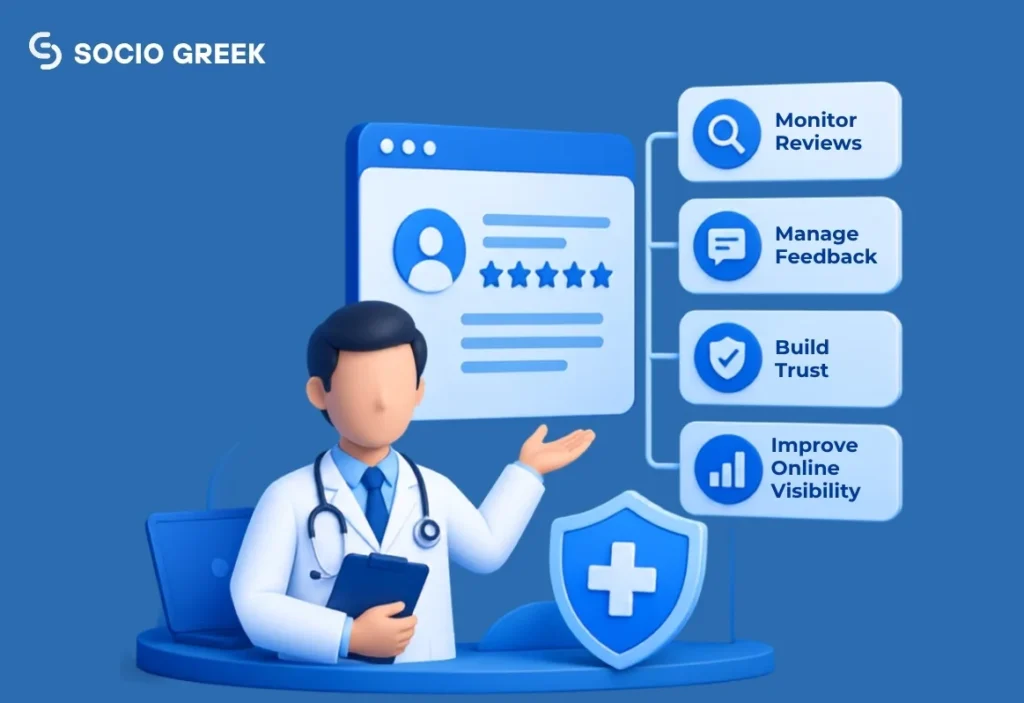
A small clinic may be able to manage a few profiles internally. The work becomes harder when a practice has several doctors, multiple locations, many reviews, or no clear response process.
A doctor’s reputation management agency can help with:
- Reputation audits
- Review and mention monitoring
- Business listing corrections
- Review response support
- Content planning
- Profile optimisation
- Sentiment and issue reporting
- Escalation of serious cases
- Monthly performance reports
Socio Greek provides online reputation management for doctors through a structured process. It begins by checking search results, reviews, listings, and profile accuracy. The next steps may include correcting information, creating response guidelines, monitoring feedback, and improving useful content around the doctor or practice.
Professional support should make the process more organised, but no agency can honestly guarantee the removal of every negative review or promise a fixed rating. Review removal depends on the platform and whether the content breaks its policies.
Best Practices for Long-Term Reputation Management
Reputation management doctors use should be consistent rather than limited to a crisis. A written process helps the clinic respond correctly even when the person managing the profiles changes.
Useful best practices include:
- Assign one person to oversee reputation activity
- Limit account access to approved team members
- Use strong passwords and multi-factor authentication
- Review major profiles every month
- Set response and approval timelines
- Train staff on privacy and professional communication
- Record links and screenshots of suspicious content
- Track common feedback themes
- Update response templates when rules change
- Review local medical advertising and privacy requirements
Medical practices outside the United States should follow the privacy, advertising, and professional conduct rules that apply in their own country. The Health Insurance Portability and Accountability Act is applicable to covered entities in the United States, but it should not be assumed that it substitutes for local legal advice.
Conclusion
Doctors’ online reputation management will let healthcare workers communicate responsibly online and provide them with crucial information about the attitudes of their patients.The process should include profile audits, regular monitoring, ethical review requests, privacy-safe responses, and action on repeated service concerns.
For practices that need a clear and managed process, Socio Greek can review the current online presence and identify practical areas for improvement. A focused reputation audit is a useful first step for understanding what patients see and where the practice needs to take action.