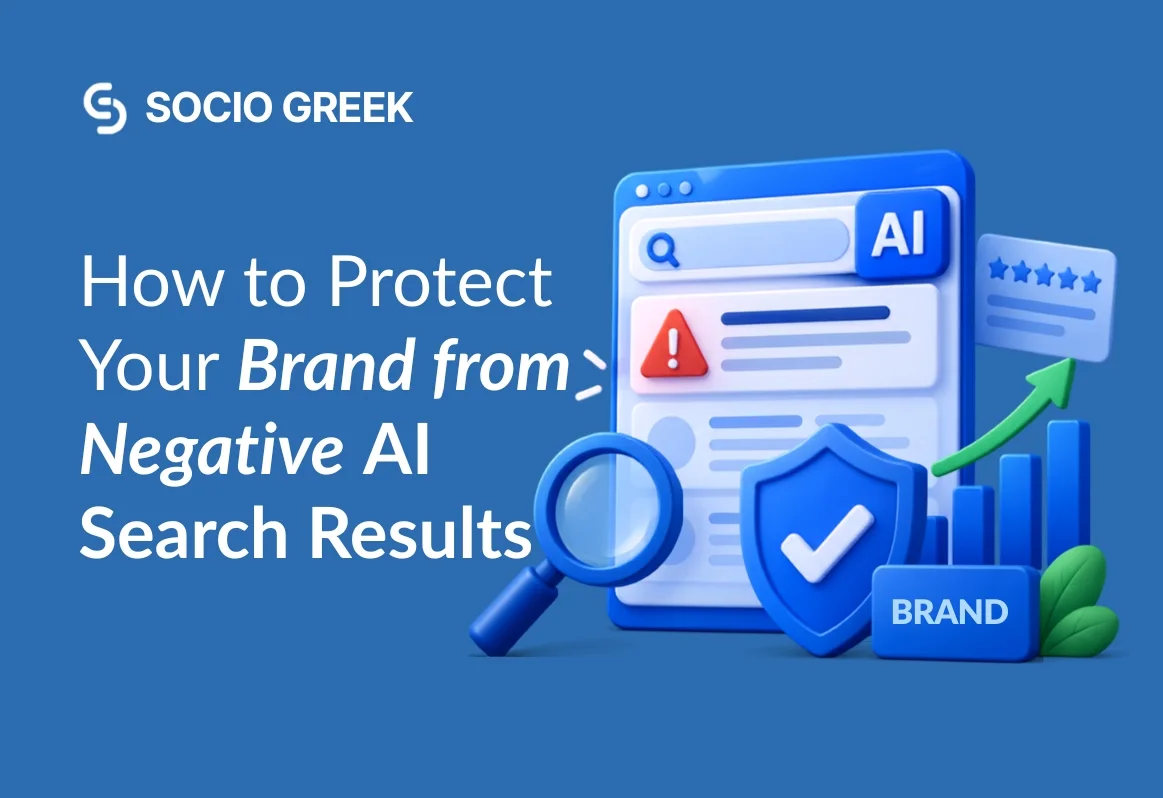
Search has subtly evolved in its form. People don’t type a question and scroll down to find the top ten blue links; they type a question and receive a single confident, synthesized answer, whether it be from ChatGPT, Google’s AI Overviews, Perplexity, or Copilot. The answer usually consists of a verdict drawn from these various reviews, forum posts, and old news articles, no matter how few or many there are, that are combined together without much regard for context or accuracy and that includes your brand.
This change has introduced a fresh and pressing issue-how best to safeguard the reputation of the brand against negative citations in AI search results. Bad reviews usually appear at the bottom of page 4 on Google, but a negative AI citation can be at the top of the first page of search results and most consumers don’t ever consider it a question.
Why AI Search Citations Are a Bigger Threat Than Traditional SEO Issues
Traditional SEO provided brands with a fighting chance. A negative article that was high could be downranked if there was a better article, backlinks and enough time. Unlike manual responses, AI-generated answers are generated based on the information it has been presented with.
- They summarize, not link. A summary of the AI may be read by users but they don’t bother reading the source article; therefore, if the claim is misleading or outdated, readers believe it to be true.
- They pull from unpredictable sources. An old (but resolved) complaint or a single comment on Reddit can carry as much weight as an actual press release.
- They lack real-time correction. But, in traditional search results, new pages are added to the index on a regular basis, meaning that the results change over time. AI models update themselves periodically; a negative story can live a lot longer than it should.
- They sound authoritative. Negative brand sentiment in AI responses is particularly harmful because people rely more on a clean and confident AI-generated response than a random blog post.
This is exactly why more businesses are turning to specialized online reputation management services the old playbook of “just get more five-star reviews” no longer covers the full picture.
How Negative AI Citations Actually Form
Before you can fix the problem, it helps to understand where it starts. Most negative AI citations trace back to one of these sources:
Source of Negative Citation | How It Gets Picked Up by AI | Typical Fix Timeline |
Old news articles or lawsuits | Indexed once, cited repeatedly for years | 2 – 6 months |
Unresolved customer complaints (Reddit, forums, review sites) | Treated as recent sentiment even if outdated | 1-3 months |
Thin or missing official brand content | AI fills gaps using third-party sources | 3-8 weeks |
Inconsistent business information across the web | Confuses AI models, leading to inaccurate summaries | 4-6 weeks |
Competitor-seeded comparison content | Framed as “neutral” but subtly unfavorable | 2-4 months |
Notice a pattern? Almost every root cause comes down to who is telling your brand’s story on the open web and whether you’re actively shaping that narrative or leaving it to chance.
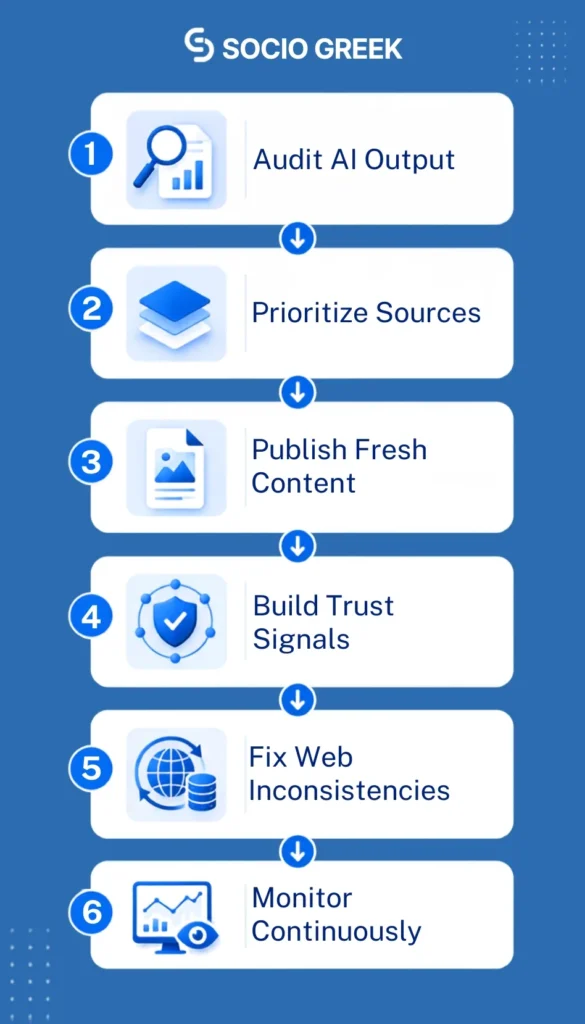
A Practical Framework to Fix Negative AI Search Citations
In order to solve the issue, it is important to have an understanding of the source of the problem. The majority of negative AI citations are from one of the following sources:
Step 1: Audit What AI Models Are Actually Saying
It is recommended to use ChatGPT, Gemini, Perplexity, and Google AI Overview to search your brand name with the queries: “Is [Brand] a scam?”, “[Brand] reviews”, “[Brand] complaints”. Make a note of the different formulations retrieved along with the sources cited.
Step 2: Identify and Prioritize the Source Content
Ensure the rating of the sources considers the number of mentions and how damaging the report is. An old negative feedback from page 5 of a given forum is less significant than a Wikipedia-type article that keeps being referenced by an AI.
Step 3: Publish Authoritative, Fresh First-Party Content
AI instruments give priority to well-structured and up-to-date content. Therefore, it becomes clear that if a brand has informative FAQs, a well-described solution to the historical issues, and is updated regularly with new data, AI will take much more into account recent facts than any previous negative impact.
Step 4: Strengthen Third-Party Trust Signals
Motivate people to leave recent and exhaustive reviews on the websites that are trusted by the AI models (Google, Trustpilot, industry-specific review websites). With scant attention being paid to the quantity of reviews, the time and the level of detail matter more.
Step 5: Fix Inconsistent Information Across the Web
Misplaced addresses, outdated names of directors, and conflicting descriptions create confusion for AI models and result in more mistakes in the conclusions that AI draws. Cleaning the information from different directories, social networks, and one’s own website is an effective yet cheap way to overcome this problem.
Step 6: Monitor Continuously, Not Just Once
Shifts in the workings of AI are viewed as the process of ongoing retraining that enables it to return to indexing.
Why This Increasingly Requires Professional Help
Doing all of the above manually, across multiple AI platforms, while running a business, is genuinely difficult. This is why demand for online reputation management companies has grown sharply over the past two years; brands need teams that understand both classic SERP reputation work and this newer discipline of AI-citation management.
The best online reputation management companies today don’t just chase five-star reviews; they:
- Track brand mentions specifically inside AI-generated answers, not just Google’s traditional results
- Build structured, authoritative content designed to be machine-readable and citation-worthy
- Coordinate legal, PR, and content teams when a negative citation stems from a real (but resolved) issue
- Provide reporting on sentiment trends across multiple AI platforms, not just search rankings
At Socio Greek, this is a core part of how we approach reputation work we treat AI search citations as their own channel, separate from traditional SEO, because the visibility they generate is different and, frankly, more consequential. Our clients get audits that specifically map what AI tools are saying about them, followed by a structured plan to shift that narrative with facts, not just optimism.
Traditional SEO Reputation vs. AI Citation Management
Factor | Traditional Reputation SEO | AI Citation Management |
Goal | Rank positive content higher | Influence what AI models summarize |
Update speed | Can act as soon as new content is indexed | Depends on AI model refresh cycles |
User behavior | Users compare multiple links | Users often trust one synthesized answer |
Key tactic | Backlinks, on-page SEO | Structured, authoritative, consistent content |
Measurement | Keyword rankings | AI response audits across platforms |
The Cost of Ignoring Negative Brand Sentiment in AI
A negative or inaccurate AI summary doesn’t just cost a single sale it compounds. Any individual asking an AI instrument regarding your brand and getting an unfavorable response is a touchpoint you have failed to control. Over time, it becomes a component of lost confidence, conversions, and a story that becomes more difficult to change.
Final Thoughts
Artificial intelligence search is not something new; it is an important way to access information about different brands and analyze them. From now on, it is important to protect the brand image from negative AI-based search results as a crucial part of the digital strategy and not as a supplementary part.
Those brands that act quickly by reviewing the information provided by AI, creating original content, and tracking results will gain the needed advantage over competing companies that simply wait for something/somebody else to tell the brand’s story for them.