One negative review, one complaint that gets picked up on Facebook or Twitter by a viral community, or a chatbot summarising yesterday’s news can alter the worldview of your brand before you realise it. Search has changed. Users don’t go around clicking on ten blue links anymore; they enter a question into ChatGPT, Gemini or Google’s AI Overviews, and take the answer. This change impacts brand reputation because it’s not just what journalists write or what customers post that now helps build the brand, but what AI engines summarize.
That’s where online reputation management service offerings and Generative Engine Optimization (GEO) meet traditional crisis communications. They create a contemporary defense mechanism to protect the brand’s visual representation, both on search engine results pages and in AI-generated responses.
Why Reputation Management Looks Different in the AI Era
Traditional Online Reputation Management was about burying bad reviews and securing good media coverage. Generative AI tools look at many sources for the data and create a single, succinct brand story from news articles, forums, reviews and social conversations. If an unaddressed crisis creates the story, it can last much longer than the life of a buried search result.
There are a few truths that compel this change:
- AI answer engines will usually summarize sentiment and not list sources, meaning that one negative story could be the AI answer to your brand.
- If a crisis is in the training data or is often referenced in the sources, it will be difficult to correct it, as opposed to just outranking a webpage.
- As consumers increasingly depend on AI-generated summaries as their first point of contact for the information they need, the first impression is more important than ever, as the quality of these AI-generated summaries is becoming more and more impressive.
This is exactly why more businesses are actively searching for a need platform for reputation management during crises one that can respond in real time, not just after damage is done.
What Is Generative Engine Optimization (GEO)?
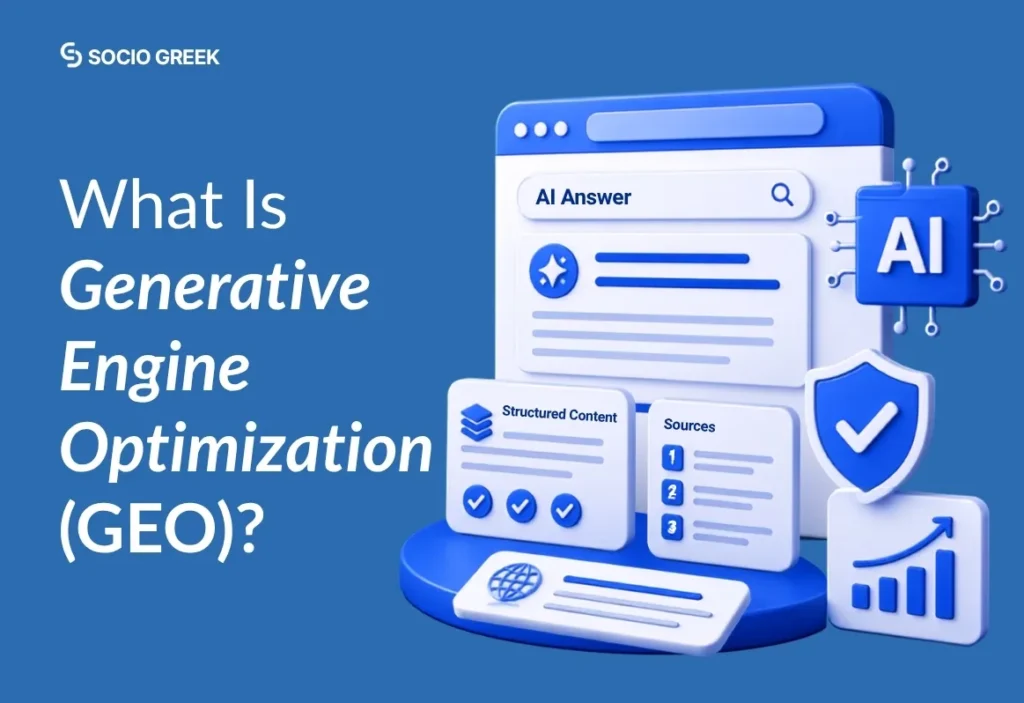
Creating content that is cited, quoted, or summarized by AI like ChatGPT, Perplexity, and AI search overviews is the core of GEO. GEO is different from regular SEO, as it goes beyond rankings and focuses on representation- how a brand is described when an AI generates an answer.
GEO services typically include:
- Organizing content to allow for easy extraction by AI models of clear, factual statements.
- Creating and sharing credible and authoritative content on a plurality of credible outlets.
- Creating a cohesive brand message for all digital touchpoints that AI could cite.
- Tracking current view of your brand in AI output and fixing any inaccuracies.
With a powerful reputation strategy, GEO helps to make sure that even when a crisis hits, the AI-backed story is not about the negative headline, but about resolution, accountability, and facts.
The Role of Crisis PR in Protecting Brand Trust

The crises management always has been speed, honesty and control of the narrative. The only thing that’s changed is that, in the meantime, multiple channels are influencing the perception of the public, and that news platforms, social media platforms, review sites, and AI summaries are changing at different speeds, which can result in conflicting messages if not handled carefully.
An effective response to a crisis in the context of pr services will usually involve the following model:
Crisis Stage | Traditional PR Action | AI-Era Addition |
Detection | Monitor news and social mentions | Monitor AI-generated summaries and chatbot responses |
Response | Issue statements, brief media | Publish structured, citable clarifications for AI indexing |
Containment | Secure favorable press coverage | Optimize content so AI sources prioritize updated facts |
Recovery | Rebuild sentiment over time | Ensure AI engines reflect the resolved, current narrative |
Press release services continue to be a fundamental element here; a well-distributed press release will produce a quick, authoritative and widely syndicated version of events for journalists and AI models to reference. In a crisis, being the first clear, factual voice often determines which version of the story sticks.
Why These Two Disciplines Must Work Together
If your official response is more based on outdated or emotional information than the AI response, your official message will be more successful with the journalist than the AI response in a crisis when there is no GEO. However, if you don’t have a crisis PR you are optimizing content for those who haven’t been told the full and honest story.
This cycle is usually as follows:
Stat snapshot: Industry observations indicate that answers generated by artificial intelligence are increasingly more likely to include recent, well-organized and multiple credible sources that reinforce the need for timely PR distribution and GEO-ready content structuring that creates and maintains long-term narrative control compared to the quality of answers achieved with either tactic alone.
- Human narrative is in the hands of crisis PR through media, statements and stakeholder communication.
- The machine narrative is a key to GEO’s control of the machine, and it determines the machine’s representation of that narrative in AI-generated answers.
- Ongoing Online Reputation Management ties both together, ensuring consistency across search results, review platforms, and AI summaries over time.
Choosing the Right Reputation Management Partner
Not all agencies are equally versed in both disciplines. Many PR firms understand media relations and many know SEO but not the sensitivity for human beings that a crisis requires. Brands need a partner fluent in both.
This is where AI-enabled content optimization, such as Socio Greek’s, comes into the picture, as it ensures the brand’s narrative is safeguarded, whether on search engines, social platforms, or AI-driven tools.
When choosing an online reputation management service, consider the following questions:
- Are they checking AI platforms, beyond Google search results?
- Are they able to create and send out press releases in a timely fashion during a crisis?
- Do they have GEO-specific content strategies as well as regular SEO strategies?
- Do you have a protocol for emerging reputation threats that’s available 24/7 or has a quick response?
Quick Comparison: Traditional ORM vs. AI-Integrated ORM
Factor | Traditional ORM | AI-Integrated ORM (with GEO) |
Focus | Search rankings | Search rankings + AI answer representation |
Speed of impact | Weeks to months | Can influence AI summaries faster with structured content |
Crisis response | Media statements, SEO push-down | Statements + GEO-optimized clarifications |
Long-term monitoring | Search result tracking | Search + AI chatbot response tracking |
Final Thoughts
Brand reputation is no longer decided solely by what ranks on page one; it’s shaped by what AI systems choose to say when someone simply asks a question. Combining strong crisis management, timely press release services, and forward-looking GEO services gives brands a real chance to control their story, both for human audiences and the AI tools increasingly standing between brands and their customers.
The businesses that adapt early, treating AI answer engines as seriously as they treat Google, will be the ones whose reputation stays intact when the next crisis hits.