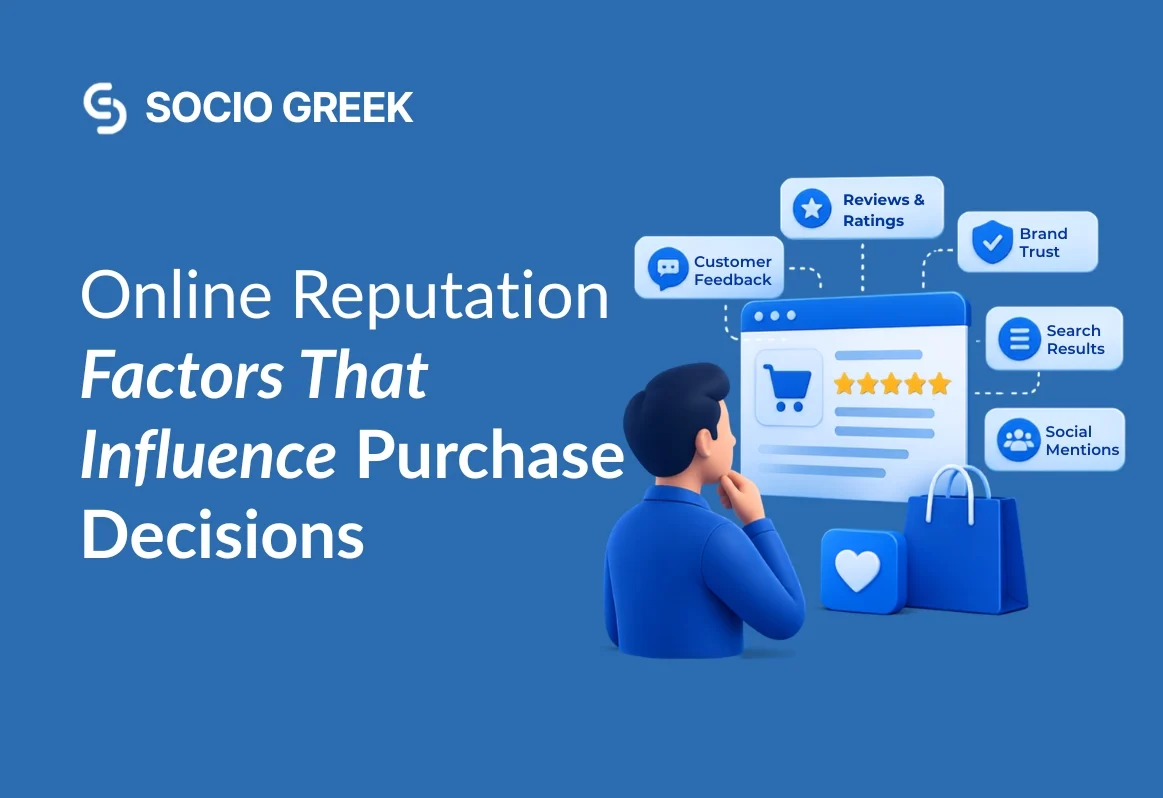
One of the most startling facts is that nearly all consumers consult online reviews before buying. Websites have found that roughly 98% of consumers read reviews at least occasionally, and a strong majority “always” or “regularly” consult reviews when choosing a local business.
Your reputation is often formed long before someone speaks to you or visits your business in today’s digital world. A Google search can help you to understand people’s perception of people about your brand, credibility and professionalism. You need to keep in mind that a negative review can significantly create downfall for your brand. Hence, because of all these, maintaining your company’s online presence is very hard these days.
Why reputation matters
Always remember that a bad review, an unmoderated social post, or an old news item can lower conversion, scare off hires, and erase months of marketing work. That’s where you need to ask yourself, if someone Googled you right now, what would they find? If you don’t like the answer, then what to do? You might need a quick plan then.
Want a practical place to start? An audit can be a good option.
Who cares about your reputation?
- Customers – they trust reviews and social signals.
- Hiring managers – many employers screen applicants online and sometimes reject candidates because of what they find.
- Investors and partners – a damaged brand is a risk on the balance sheet.
- Search engines & platforms – their algorithms favor fresh, authoritative, and authoritative content.
Quick ORM Terms to Know
- SERP: Search Engine Results Page, where people can see when they Google you.
- Knowledge Panel is the right-hand box on Google for an organization.
- Positive, neutral and negative Sentiment Mentions.
- Takedown: Legal or platform removal of material.
The Best Reputation Management Strategies in Digital Marketing
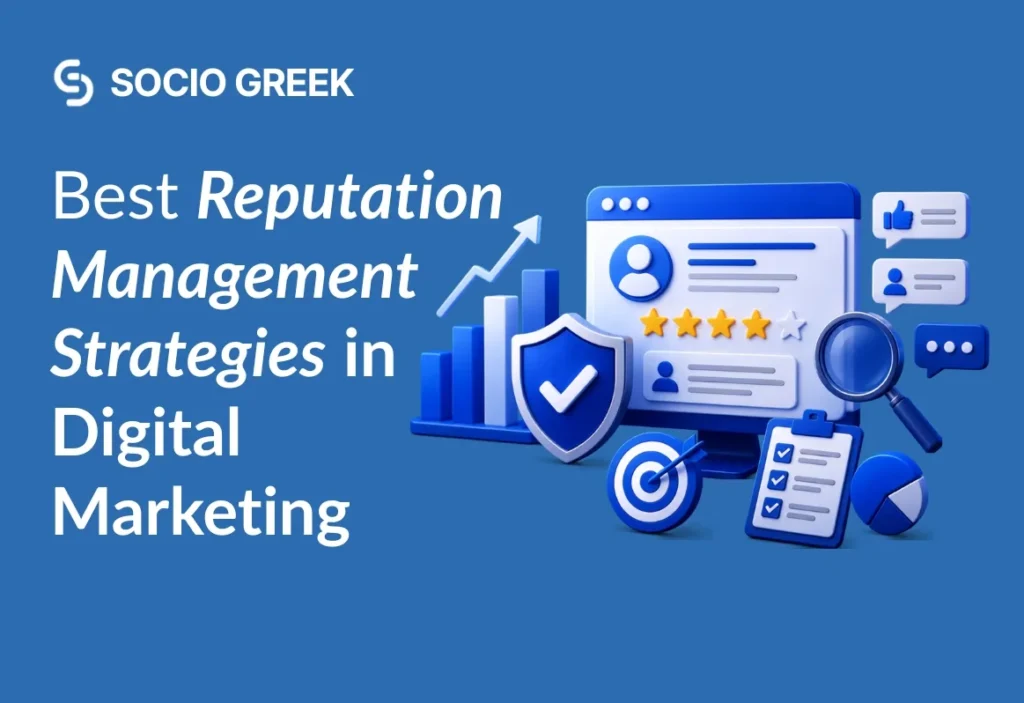
Always have the right strategy, consistent monitoring, and expert execution while managing your online reputation. However, if you don’t have the expertise for all these, taking the help of professionals can be one of the most effective decisions. Here, Socio Greek, a digital marketing and online reputation management agency, uses proven strategies to help businesses build trust and handle negative online mentions effectively. If you want to understand how these strategies work in practice, you can also read our website page about this service at Socio Greek to see how reputation management is handled step by step.
1) Audit: find everything that exists about you online
When conducting the initial search, start a general one, in which you will enter your brand or name in brackets, search images, and the following valuable platforms: Google Business Profile, Facebook, LinkedIn, Instagram, Twitter/X, Yelp, Trustpilot, Glassdoor. When doing more detailed research, the site: searches must be used (e.g., site:reddit.com “your brand”). So, these are the major steps that you have to take care of.
2) Prioritize: rank risks and opportunities
Rank items based on the visibility (ranking in the search engine, traffic on the platform) and severity (risk of legal action, brand destruction). You must understand that one star review on Yelp is not as urgent as a viral investigative article.
Micro-hook: want to triage like a pro? Use a 1-5 impact scale and fix the top three.
3) Optimize: own your top search assets
The assets that you should own and maximize first are your website, LinkedIn page, and Google Business Profile. Make sure that:
- Know who you are in your homepage and the About page of your site.
- Richer SERP features (Schema markup Organization, Person) are applied.
- Consistent NAP (Name, Address, Phone) data is used in the profiles.
Negative items are pushed down by the search results that one owns. Want proof? With the sites of authority and active profiles, companies usually push the pages with complaints far down in several weeks.
4) Content strategy: publish authoritative, evergreen proof
Share information that satisfies the queries that are being asked about you. Mix formats:
- Blogs on thought leadership.
- Testimonials and case studies.
The most effective reputation management guide of stale negativity is an endless stream of content that is useful. How often should you publish? A starting cadence acceptable is the weekly shorter and the monthly long-form.
5) Reviews & feedback: systematize asking and responding
Social proof and a conversation; they are. Companies that are proactive turn around a greater number of prospects. Set a process:
- Ask (post-purchase messages, SMS, receipts).
- Ease of use (one- click review links).
- Respond in 72 hours in an empathetic manner.
Data table – response time vs. consumer expectation
Metric | Recommended target | Why it matters |
Requesting a review | within 48–72 hours post-purchase | Recency increases response rate |
Respond to negative review | within 72 hours | Consumers expect a timely response |
Average review age shown | Keep < 6 months fresh | Many consumers prefer reviews within recent months. |
Micro-hook: which of your pages already makes asking for feedback trivial?
6) Monitoring & measurement: set KPIs and alerts
Track:
- Share of positive vs. negative mentions.
- SERP positions for branded and high-risk queries.
- Review volume and average rating.
Set alerts for spikes and automate weekly summary reports. Monitoring is non-negotiable – you can’t manage what you don’t measure.
7) Legal & takedown: when to escalate beyond content
Not all things can and ought to be taken away. Reserve legal routes for:
- Defamation (False statements made out to be true).
- Copyright infringement.
- Privacy violations.
Use lawyer advice on cease-and-desist letters, where they tend to backfire when abused.
Mini-case: The Freelancer Who Fixed a 1-star Nightmare

One of the designers working as a freelancer was ranked 1-star in the first position with their name. They did an audit, enhanced the SEO of their website, and made two case studies in the following month and showed courtesy to the reviewer, asking them to fix the problem. In six weeks, the negative review dropped to page two and new positive reviews were on page one. The lesson? SEO + responsiveness + new content.
Micro-hook: can you identify a one-week experiment you can do to replicate this?
When to Hire An Online Reputation Management Agency (and what to expect)
Fluctuations in the online reputation require the hiring of an online reputation management agency in order to have speed, sustained monitoring, and experience in platforms and legal escalation. Socio Greek is one of the best ORM services that offers an integrated digital marketing and ORM system: they lead audits, organize content and SEO, handle reviews and develop crisis playbooks: you can dedicate your time to business and experts will recover and build your digital trust.
How Socio Greek helps
Socio Greek is a digital marketing and Online Reputation Management company that combines content, Internet marketing, and management of reviews to create one program. They audit your existence, introduce swift improvements in order to better your SERP presence, and carry out continuous monitoring to ensure that minor problems do not turn into crises.
Would you have Socio Greek conduct a 30-point reputation audit and demonstrate where to begin free of charge? Comment below.